pursuing faithfulness to the Word of God and fullness of the Spirit of God
Posts tagged Holy Spirit
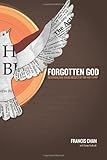
Book Review – Forgotten God (Francis Chan)
Aug 6th

This is the first book I’ve read from Francis Chan. By all accounts his “Crazy Love” is an excellent read. And Tim Chester gave this book a ringing endorsement this week too.
The book is subtitled “Reversing our tragic neglect of the Holy Spirit”. As someone who has come from a charismatic background, it does seem a little strange to hear the Holy Spirit referred to as the “Forgotten God”. If anything, those in my circles are often accused of an over-emphasis on the Spirit. Which perhaps explains why I really felt as though I was not quite in the “target audience” for this book.
Chan seems to be aiming at a popular level, perhaps at those who rarely read theology books, and at those who theologically occupy a middle ground somewhere between cessationism and full-blown pentecostalism.
The first two chapters are devoted to urging us to be willing to completely rethink our opinions on the Holy Spirit, returning to the Bible. This is sound advice, but I didn’t feel he went on to overthrow any existing beliefs I had. His chapter on the theology of the Spirit is only the briefest of overviews of Biblical teaching on the Spirit.
Scattered throughout the book are short biographical accounts of people that Chan considers to be “Spirit-filled”. The focus is (perhaps deliberately) not on those whose lives have been characterised by miracles or supernatural gifts, but on those who showed extraordinary godly character (fruit of the Spirit) and who took bold steps of faith to serve the poor. It is a helpful reminder that the Spirit-filled life is not always necessarily a spectacular one.
There is a chapter on the importance of having a real relationship with God through the Spirit. Chan picks out “comfort” and “volume” as being two things that hinder us from truly connecting with God – we are too comfortable or too busy to have a deep relationship with God (see Tim Chester’s post for these obstacles to intimacy).
Another chapter warns against being so focused on God’s will for your life (i.e. your future plans) that you forget to follow him in the now. He reminds us that we do not invite Jesus to follow us around, but we are to follow him. The call to take up our cross is a call to a radical faith. And this is Chan’s passion – that we would settle for nothing less than a life sold out to following Jesus – a life following the Spirit. He argues the same for churches in the final chapter. It is too easy for a church to rely on simply doing things well. But even if it brings growth, without the Spirit, it is meaningless.
Overall I felt there were many things about the Holy Spirit that were left unsaid in this book. And to be fair, Chan has deliberately kept the book short and accessible. He has a great way with words, and it won’t take you long to read through. The book’s chief strength is not as a theology of the Spirit, but as a challenge to live radical lives following the lead of the Spirit. It would be a good place to start for a Christian who has thought little about the Holy Spirit before. And the call to a more radical, wholehearted following of Jesus as we are led by the Spirit is one that all believers and local churches, desperately need to heed.
William Temple on Christlikeness and the Spirit
Feb 6th
In John Stott’s Radical Disciple, in a chapter on Christlikeness, he cites William Temple:
It’s no good giving me a play like Hamlet or King Lear and telling me to write a play like that. Shakespeare could do it; I can’t.
And it is no good showing me a life like the life of Jesus and telling me to live a life like that. Jesus could do it; I can’t.
But if the genius of Shakespeare could come and live in me, then I could write plays like his.
And if the Spirit of Jesus could come and live in me, then I could live a life like his.
Stott concludes:
God’s purpose is to make us like Christ, and God’s way is to fill us with his Holy Spirit
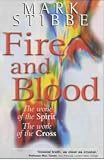
Book Review – Fire and Blood (Mark Stibbe)
Dec 22nd
In this book, Mark Stibbe explores the relationship between the work of the Spirit and the work of the cross. He recognises there is a divide in evangelicalism between those whose primary emphasis is the cross and those whose primary emphasis is the Spirit. Some are after holiness, others healing; some ask for more of the cross, others for more power. Stibbe seeks to show in this book that the two are not necessarily in opposition to one another – the Spirit leads us to the cross, and the cross leads us to the Spirit.
Part One of the book explores the fact of the cross, and in particular highlights the role of the Spirit. The Spirit’s role in the Old Testament was to give the prophets a vision of what was to come – the suffering Messiah and his exaltation. He then moves on to consider the life and death of Jesus. Jesus was not just man of the cross, but man of the Spirit. The Spirit anointed Jesus for works of power and for affliction.
The Jordan experience was an anointing for sacrifice as well as an empowerment for service.
Stibbe argues that the Spirit enabled and empowered Jesus right to his death. Though he was lonelty, he was not alone. He sees evidence of the Spirit’s presence in Jesus’ prayer of “Abba, Father”. Drawing on Gordon Fee’s commentary, he shows how Col 1:10,11 reveals that the power of the Spirit is not always for signs and wonders, but is also power for endurance and patience. This is the power of the Spirit that Jesus experienced at the cross.
Finally in the first section of the book, Stibbe shows how Calvary led to Pentecost, and in particular, how Pentecost marked a new era in how the Spirit relates to believers. He is now universally, internally and permanently available for all God’s people.
The second part of the book explores the life of the believer. How does the work of the Spirit relate to the cross-shaped life? One of the great advantages of exploring the cross with regard to the work of the Spirit, is that it results in a Trinitarian perspective on the atonement. The Father plans salvation, the Son does the work of salvation, and the Spirit applies our salvation.
The Spirit leads us to the cross in revelation. The cross leads us to the Spirit in regeneration.
He then explores the work of the Spirit under three headings: Jesus saves, heals and delivers. Every salvation is a miracle where the Holy Spirit reveals the power of the cross to an unredeemed mind. But also, the evidence of the New Testament is that even after the ministry of Jesus, the Spirit continued to work miracles of healing. Stibbe’s comments on healing are some of the most helpful I have come across. He does not believe that healing is automatic in the atonement, but at the cross, Jesus defeated the power that lies behind human sickness. As we live in the time between the ages, our prayers for healing are either answered with a “now” or a “not yet”.
Interestingly, he then goes on to argue for a trichotomous human nature (body, spirit, soul). So Jesus saves our spirits, heals our bodies, and delivers our souls, which Stibbe defines as the mind, will and emotions. The Spirit brings deliverance to us in regards to bondage in these areas too.
The final chapter starts by pointing out that the book of Mark falls into two halves – one of miracles, and one of martyrdom. From the first half we might deduce a theology of glory, but from the second, a theology of the cross.
the way of discipleship involves suffering as well as glory, martyrdom as well as miracles, the cross as well as the Spirit.
He goes on to apply this to our sanctification, which is also by the cross and the Spirit. Some emphasise the need for self-denial, for taking up the cross. Others simply focus on being filled with the Spirit. Both work together in our sanctification. Stibbe warns that the neglect of the doctrine of mortification has produced consumeristic believers who want the life of the Spirit without the crucifixion of their flesh. He brings the book to a close with some reflections on how the cross and Spirit help us to face our own death in a hope-filled manner.
This book has much to commend it, and should definitely be on the reading list of anyone who has struggled with the tensions between the differing emphases of the charismatic and evangelical camps. Mark Stibbe is a good writer and packs the book full of helpful illustrations, quotations from a wide variety of theologians and interesting bits of historical background. The thing I most appreciate about this book is how he brings some very necessary correction of emphasis to charismatic theology that has lost sight of the cross, but without ever doing so at the expense of the appreciation of the miraculous work of the Spirit. It is a shame this book is not more well known. If there is another book that explores the connection between the cross and Spirit so well, I am not aware of it (let me know in the comments).
Some Thoughts on ‘Treasure Hunts’
May 7th
A new form of evangelism known as “treasure hunting” has gained popularity in recent years, stemming I think from a book written on the subject (which I haven’t read). The basic idea is that you spend a while praying for words of knowledge concerning specific people (e.g. someone called Brian, someone with a green jumper, someone with a knee problem etc). Then simply go out on the street, looking for people who match those descriptions, strike up a conversation (“I’m looking for treasure, and I think you’re it” – great chat up line!), and then offer to pray for them. For an idea of what goes on, have a browse through Simon Holley’s blog archives.
I have heard many exciting testimonies of people receiving healing, gratefully receiving prayer, engaging in deep conversations about the gospel, and accepting invitation to come to church or Alpha courses. There is a group here in Southampton who are attempting this form of evangelism, and I am hoping that the cell group I lead will be able to join them on one of their next excursions.
I do have to confess to having a few reservations concerning this method of evangelism, which mostly stem from the understanding of a “word of knowledge”. Much of what passes for words of knowledge often seem to me to be nothing more than lucky guesses (in fact, too often guesses that miss the mark totally). The idea that any random thought that pops into my head should be uncritically accepted as God speaking strikes me as a sub-biblical understanding of prophecy.
But enough negativity already. This technique, though somewhat unconventional does have a few important things going for it.
First, on a very pragmatic level, it provides a conversation starter. There is nothing more likely to end a conversation than asking someone “do you mind if I tell you about Jesus?” The whole idea of a “treasure hunt” provides a way to break the ice with a stranger, and allows the conversation to naturally move on to spiritual matters.
Second, it encourages a reliance on the Spirit’s guidance. Even the most ardently non-charismatic groups I have done evangelism with have recognised the vital importance of being Spirit-filled in our witness. To pray for God to divinely guide us to those in whom his Spirit may already have been working in, as well as to trust him for the right words to say is surely the right way to begin any form of evangelism.
Third, it focuses not on apologetics, but on demonstration of God’s power. Important as apologetics certainly is – people do need to face and answer their questions concerning the truth of the gospel, often apologetics can be a red herring. A chance to pray with someone gives the opportunity for them to experience first hand the living God who hears and answers prayer.
Finally, it requires faith. The fear of looking foolish or getting it wrong holds many of us back from stepping out and telling others the gospel. Praying for someone in public is a risk – what if the prayer is not answered? What if they think you’re insane? And yet, it seems that so often God is pleased to act when his people have nowhere to hide, and have to trust him completely.
So it is not hard for me to see why God may indeed be blessing those who use this mode of evangelism. I tried to think of any examples of this being used in the New Testament. I suppose you could point to Jesus’ discussion with the woman at the well in John 4. Though his meeting with her was apparently a chance encounter, the supernatural revelations concerning her circumstances certainly opened her up to consider Jesus’ message.
Or Paul, who had a vision in the night of a man of Macedonia (Acts 16:9). He saw this as God’s leading to evangelise in that region and off he went. Interestingly, he doesn’t appear to have attempted to find the man he saw in the dream. When he got there, he took the strategic approach of searching for devout worshipers of God (Acts 16:13) as well as taking advantage of the chance encounter with the slave girl (Acts 16:16).
So while I am not wholeheartedly endorsing the technique of “treasure hunt” evangelism, I do want to be someone who is full of faith, following the Spirit’s lead, and seeing God’s power at work in changing lives as people hear and believe the gospel of Jesus Christ.
I would be interested to hear of any readers who have done this, and what your thoughts and experiences were.
Convicted of Righteousness
Jan 2nd
8 And when he comes, he will convict the world concerning sin and righteousness and judgment: 9 concerning sin, because they do not believe in me; 10 concerning righteousness, because I go to the Father, and you will see me no longer; 11 concerning judgment, because the ruler of this world is judged. (John 16:8-11 ESV)
I have always felt that these verses in John are quite tricky to understand. From reading some commentaries, it appears that the Greek isn’t straightforward either. The concept of the Spirit “convicting” people of sin is not problematic, but what does it mean that he will convict people of “righteousness”?
One solution that I have heard is to take the word ‘convict’ to mean ‘convince’. i.e. The Spirit will convince people that Jesus is the righteous one. Or he will convince them of their need to be righteous. Not only does this require a modification in the meaning of the word convict between verse 9 and 10, but it is in danger of making the Spirit’s work into a merely intellectual persuasion.
Don Carson offers an interesting alternative take on what it means to convict the world concerning righteousness:
John loves to quote or allude to Isaiah, and Isaiah 64:5 establishes that all the dikaiosyne (righteousness) of the people of Isaiah’s day was as a menstruous cloth. Within the Fourth Gospel, this reading of ‘righteousness’ is eminently appropriate. (The Gospel According to John, PNTC, D A Carson, p537)
What does this make of the clarifying phrase: “because I go to the Father, and you will see me no longer”? Carson explains that the Spirit is simply continuing an important aspect of the ministry of Jesus, confronting and challenging religious hypocrisy:
The reason why the Paraclete convicts the world of its righteousness is because Jesus is going to the Father. … [The] Paraclete … drives home this conviction in the world precisely because Jesus is no longer present to discharge this task.
Not all commentators are convinced by this. Köstenberger considers it plausible, but prefers a legal interpretation:
… the Spirit of truth in his legal function of parakletos is said here to prosecute the world on the basis of the righteousness of Jesus, who is declared just and vindicated in court. (John, BEC, Andreas Köstenberger, p472)
However, if Carson is right, this is a very provocative concept. All Christians know what it feels like to be convicted of sin by the Spirit, but have you ever been convicted of “righteousness”? We know the Spirit’s voice telling us that our bad temper, greed or impure thoughts are sinful and we need to repent, but have we ever considered that some of our religious good deeds could in fact require repentance too?
Repentance for empty legalistic ‘righteousness’ would take on a different form to repentance from sin. Repenting from sin involves stopping the wrong behaviour, but repenting from righteousness requires something even deeper. After all, the Pharisees regularly gave alms to the poor and prayed daily. Jesus was hardly intending for them to stop these activities. Repenting from legalism is therefore a change of heart rather than necessarily outward behavioural change.
Like many Christians at the start of a new year, I try to make resolutions concerning things like Bible reading and prayer, as well as other spiritual goals for the coming year. But we need to beware of turning from grace to legalism and doing the right things with the wrong motivation, or before long, we will find the Spirit convicting us of our shallow religious ‘righteousness’ and calling us back to a relationship with God based on delight and not duty.