 Word & Spirit Press were kind enough to send me a copy of Theology with Spirit: The Future of the Pentecostal-Charismatic Movements in the 21st Century, by Henry I. Lederle to review. Readers of this blog will know that I have an interest in the history of the charismatic movement, and have previously reviewed Andrew Walker’s Restoring the Kingdom and John Fleming’s Bind Us Together.
This book takes a broader perspective, and attempts to trace the Pentecostal and Charismatic movements right through to the present day. Obviously this is a huge task, but Lederle has managed to compress the story down very effectively to highlight the main characters, movements and theological ideas, and it makes for a fascinating read. Of particular interest is the way he seeks to link in the theological developments with the transition from modernity to post-modernity. He sees the initial opposition from cessationists as evidence of a modernist worldview infiltrating the church.
I already knew a bit about the Asuza street revival, but there is much in this book that was new to me. It is interesting to read his analysis of the effect of Pentecostalism on Roman Catholocism, Orthodoxy, along with other “communions”. Especially helpful is his concise explanations of the theology of different key groups such as the Wesleyan holiness movement, the oneness Pentecostals and the Latter Rain movement.
Following on from the roots of Pentecostalism, he moves onto the “second wave”, or denominational charismatic renewal. He includes a helpful analysis of the broad range of views on Spirit baptism, that departed from the initial Pentecostal positions.
Under the heading the “third wave”, he differs slightly from Wagner, and defines the third wave as independent charismatic churches. He considers several groupings, including “Restorationist”, “Dominion”, “Empowered Evangelicals” (e.g. Wimber), before finally moving on to “Word of Faith”.
This is where it gets interesting, since although Lederle has been very even-handed throughout, he does have an affinity with the Word of Faith movement, and was a lecturer for many years at Oral Roberts University. While he accepts the movement has come in for some deserved criticism, he feels it has now self-corrected its exesses, and identifies and defends four theological contributions the movement makes.
The latter part of the book explores the future of Spirit movements, including a review of various new papers published by young charismatic and pentecostal scholars, many from ORU. He also takes some time to explain his own unique take on Spirit baptism (a “dimension” with “events”), which I must confess to not fully understanding (probably need to re-read this a few times).
He concludes the book with the claim that he believes the Word of Faith churches will be at the forefront of the spread of the charismatic movement in the coming years, and interestingly, does not predict much success for the apostolic networks Peter Wagner has identified as being so significant (see my recent review of Dave Devenish’s book on apostles). I have no idea whether he is right, but I am sure he is correct when he identifies several countries in the global south that have been deeply influenced by Word of Faith theology.
He argues that the four Word of Faith disctinctives (1. the Believer’s Inheritance; 2. the Authority of the Believer; 3. Positive Confession; and 4. Prosperity), when articulated correctly, are all perfectly biblical ideas, and when properly understood are not the heresies they are often accused of being. And indeed, his carefully nuanced explanations of these four ideas are not as objectionable as the more bluntly stated versions I am more used to hearing.
In summary, I would say that the first half of this book is superb and will be enjoyed by anyone who has an interest in the history of the Pentecostal and charismatic movements. He has clearly done his research well and his analysis is very interesting. This part of the book would perhaps have benefitted from footnotes, but there is a good bibliography at the end.
The second part of the book caught me off guard. As someone from the more reformed end of the charismatic spectrum, I have grave concerns about the teaching I hear coming from the Word of Faith movement, and do not have a positive opinion about the “prosperity gospel”. It certainly is possible that some critics have misunderstood or misrepresened them – that has happened to almost every group within the church at some point. If Lederle is right about the future prominence of this movement, then it would perhaps benefit us to be more aware of what they are actually teaching, in order that we can make an accurate and biblical evaluation and critique of their contribution to Christian thought.

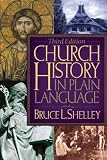 I suspect many Christians feel like I do about church history. I find it fascinating and confusing at the same time, and whilst I know the stories of a few key individuals, I lack a grasp of the big picture. So when I heard someone recommend this book that tells the story of church history from Jesus right through to the present day, and does so in “plain language”, I ordered myself a copy.
 I have been highly anticipating the release of this book, ever since I read (and loved) Mike Reeves’ brief history of the Reformation (
