
The Bible Speaks Today series is responsible for me getting interested in reading commentaries. The first one I bought was Michael Green’s volume on Matthew, which I then followed with Stott on Romans. Both were excellent and now I have read 51 (just 1 to go!).
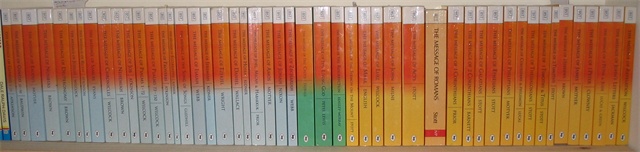
The Bible speaks today series has been slowly growing for almost 40 years and is now nearing completion, with just a couple of Old Testament books to go. (There is also a Bible themes series which has about 10 volumes) It is conservative evangelical in outlook, and therefore the books in question are understood in the light of the rest of the canon. The Old Testament in particular is viewed from a Christian perspective. They are in a fairly large paperback format, with a typical length of 200-300 pages.
The series benefits from two highly competent editors – Motyer and Stott (OT and NT respectively). They ensure that, in keeping with the series title, each volume is more about what Christians can learn from the book rather than being simply a ‘commentary’. Their judicious and even-handed editorship is evidenced by the remarkably broad spectrum of British evangelical leaders who have endorsed the series.
The authors are typically British Anglicans, and most are pastors rather than academics, although the writers are not lacking in scholarly expertise, and some have contributed to more technical series. Authors are frequently chosen for having preached a notable sermon series on the book in question to their own congregations. This makes the books often feel like a collection of expository sermons, and full of practical application.
They are designed to be accessible to all Christians who want to study a book in a bit more depth, and to this end the New Testament series has been furnished with a study guide, which offers a few (thankfully not patronising) questions on each chapter.
The books begin with a short introduction and bibliography, in which they will typically outline the main arguments for accepting the book’s historicity and traditional authorship. More important however, is the intention to communicate the biblical author’s main message, to demonstrate the continuing relevance of the book.
The commentary itself can vary dramatically in length. For example, Jeremiah is shorter than Jonah. Only two books (Genesis and Psalms) are covered in two volumes. In particular, some of the commentaries on the shorter NT epistles are quite long, and include treatment of issues covered by more intermediate level commentaries. Volumes on shorter books of the Bible will also typically include the biblical text. Most are based on the NIV, although some of the older ones use the RSV.
The authors are generally given freedom to make points on related issues such as ecology, the ecumenical movement, third world debt, infant baptism and so on. Where evangelicals are broadly agreed, they are forthright, and where evangelicals are divided, they are firm but never belligerent. The commentary is not always sequential either, with some sections being studied out of order, and in the case of Proverbs, approached thematically. You can expect the occasional key Greek or Hebrew word to be discussed, but no specialist vocabulary is presumed and it is always transliterated. They will not normally discuss the opinions of other commentators, but may well tie in current events.
This series is ideal for Christians who want to dig a bit deeper into a particular book of the Bible but find standard commentaries overwhelming and dull. Those looking for help preparing a Bible study on a passage will find it will provide plenty of ideas and insight.
The series is accessible but it’s not lightweight, and will perhaps still prove heavy-going for those who do not read non-fiction often. Slightly more readable series to try might be Tom Wright’s “For Everyone” series, or “Focus on the Bible” from Christian Focus. Alternatively, those looking for a bit more technical depth while retaining the evangelical and practical focus might want to try the Pillar (PNTC), Tyndale (TNTC, TOTC), New American (NAC) or NIV Application (NIVAC) series.
For me the series highlights are Leviticus (Tidball), Chronicles (Wilcock), Song of Songs (Gledhill), Ezekiel (Wright), Hosea (Kidner), Matthew (Green), Romans (Stott), Ephesians (Stott), 2 Timothy (Stott), and John’s Letters (Jackman). They have been most helpful for me in appreciating the main message of those books. I have reviewed a number from the series here on my blog:
- Genesis 1-11 (David Atkinson)
- Genesis 12-50 (Joyce Baldwin)
- Exodus (Alec Motyer)
- Leviticus (Derek Tidball)
- Numbers (Raymond Brown)
- Deuteronomy (Raymond Brown)
- Judges (Michael Wilcock)
- Ruth (David Atkinson)
- 1 & 2 Samuel (Mary Evans)
- 1 & 2 Kings (John Olley)
- 1 & 2 Chronicles (Michael Wilcock)
- Ezra & Haggai (Robert Fyall)
- Nehemiah (Raymond Brown)
- Esther (David Firth)
- Job (David Atkinson)
- Psalms 1-72 (Michael Wilcock)
- Psalms 73-150 (Michael Wilcock)
- Proverbs (David Atkinson)
- Ecclesiastes (Derek Kidner)
- Song of Songs (Tom Gledhill)
- Isaiah (Barry Webb)
- Jeremiah (Derek Kidner)
- Ezekiel (Christopher Wright)
- Daniel (Ronald Wallace)
- Hosea (Derek Kidner)
- Joel, Micah & Habakkuk (David Prior)
- Amos (Alec Motyer)
- Obadiah, Nahum & Zephaniah (Gordon Bridger)
- Jonah (Rosemary Nixon)
- Zechariah (Barry Webb)
- Sermon on the Mount (John Stott)
- Matthew (Michael Green)
- Mark (Donald English)
- Luke (Michael Wilcock)
- John (Bruce Milne)
- Acts (John Stott)
- Romans (John Stott)
- 1 Corinthians (David Prior)
- 2 Corinthians (Paul Barnett)
- Galatians (John Stott)
- Ephesians (John Stott)
- Philippians (Alec Motyer)
- Colossians & Philemon (Dick Lucas)
- 1 & 2 Thessalonians (John Stott)
- 1 Timothy & Titus (John Stott)
- 2 Timothy (John Stott)
- Hebrews (Raymond Brown)
- James (Alec Motyer)
- 1 Peter (Edmund Clowney)
- 2 Peter & Jude (Dick Lucas & Christopher Green)
- John’s Letters (David Jackman)
- Revelation (Michael Wilcock)
Jeremy Pierce has also reviewed James (Alec Motyer) and 1 Peter (Edmund Clowney).
I have found this to be an excellent series as well. I have been using Stott on Romans and find it to be superb. His introductory material was extremely helpful, including his comments on New Perspective thinking.
Thanks for pointing that out. When I read the Romans volume 5 years ago I had never even heard of the New Perspective or Sanders, so I shall re-read that section of the introduction.
This is the second introductory post to my series reviewing commentaries on different books of the Bible. The first introduces the series and explains some of the classifications I’ll be using. This post will review the various series of commentaries….
How on earth did the early church survive without access to these ‘wonderful’ books!
We certainly are blessed in this modern culture.
I’ve also reviewed Edmund Clowney’s I Peter volume.
This exposition of the Sermon on the Mount was originally published under the title “Christian Counter-Culture”, before being added to the Bible Speaks Today series some years later. Although it only covers three chapters of Matthew, it is a worthy additi
Although this book covers only four short New Testament chapters, it is larger than many of the others in the Bible Speaks Today series. This is surprising as the BST series does not contain academic or detailed exegetical material, but rather focuses on
This volume in the Bible Speaks Today series presents the main themes of 1 Peter as the suffering that Christians must face as “resident aliens” in a world of rebels against God. The introduction is brief, and the style of commentary is expository – almos
I just noticed that you haven’t written reviews of most of the ones you consider highlights. Do you intend to do that at some point? I’d like to know what about them made them stand out more than the other volumes.
I started reading BST volumes about 5 years ago, before I was writing reviews. The ones listed as highlights are the ones that I found interesting from from front to back cover, and significantly impacted the way I thought about the book in question.
It may be that I rated some of the first ones I read too highly as I was new to reading commentaries. When I have finished reading all the ones I haven’t read yet (mainly OT ones now), I want to go back and re-read some of my favourites that haven’t been reviewed here. Realistically, its likely to be more than a year before I find the time to do this.
I won’t attempt to write reviews of books I read a few years back without re-reading them. My memory is simply not good enough to enable me to write a worthwhile review.
That’s a good enough explanation for me. I don’t like to write reviews on books I read a while ago without doing some review. I have been known to post reviews I wrote a while back, however, with some changes to reflect continued reflection on the material in the book. Many of my revised Amazon reviews posted on my blog are like that. If you don’t have a starting point, though, that’s hard without spending a lot more time in the book.
Pingback: Book Review – The Message of Jeremiah (Derek Kidner) « wordandspirit
Pingback: Book Review – The Message of the Sermon on the Mount (John Stott) « wordandspirit
Pingback: The Message of John (Bruce Milne) « wordandspirit
Pingback: Book Review – The Message of Galatians (John Stott) « wordandspirit
Pingback: Book Review – The Message of Hebrews (Raymond Brown) « wordandspirit
Pingback: Book Review – The Message of 1 Peter (Edmund Clowney) « wordandspirit
Pingback: Book Review – The Message of 2 Peter and Jude (Dick Lucas & Christopher Green) « wordandspirit
Pingback: Book Review – The Message of Revelation (Michael Wilcock) « wordandspirit
Pingback: Book Review – The Message of Numbers (Raymond Brown) « wordandspirit
Pingback: Book Review – The Message of Leviticus (Derek Tidball) « wordandspirit
Pingback: Book Review – The Message of Genesis 12-50 (Joyce Baldwin) « wordandspirit
Pingback: Book Review – Joshua (Dale Ralph Davis)
Pingback: Book Review – The Message of Ezekiel (Chris Wright)
Pingback: Book Review – The Message of Esther (David Firth)
Pingback: Book Review – The Message of Acts (John Stott)
Pingback: Book Review – The Message of Ecclesiastes (Derek Kidner)
Pingback: Book Review – The Message of 2 Corinthians (Paul Barnett)
Pingback: Book Review – The Message of Judges (Michael Wilcock)
Pingback: Book Review – The Message of Jonah (Rosemary Nixon)
Pingback: Book Review–The Message of Ezra and Haggai (Robert Fyall)
Pingback: Book Review–The Message of Nehemiah (Raymond Brown)
Pingback: Book Review – The Message of the Resurrection (Paul Beasley-Murray)
Pingback: Book Review – The Radical Disciple (John Stott)
Pingback: Book Review–The Message of Ephesians (John Stott)
Pingback: Book Review–The Message of Matthew (Michael Green)
Pingback: Book Review–The Message of 1 Timothy and Titus (John Stott)
Pingback: Book Review–The Message of 2 Timothy (John Stott)
Pingback: Book Review–The Message of Obadiah, Nahum & Zephaniah (Gordon Bridger)
Pingback: Book Review–The Message of Romans (John Stott)
Pingback: wordandspirit » Book Review–Fathering Leaders, Motivating Mission (David Devenish)
Pingback: Book Review – The Message of Chronicles (Michael Wilcock) | wordandspirit
Pingback: Book Review – The Message of Kings (John Olley) | wordandspirit